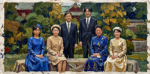
A legal document drafted in the aftermath of defeat and occupation has become the greatest threat to the world’s oldest royal institution. The historians who warned about this were not wrong. They were simply ignored.
There is a question I have put to students of constitutional history with some regularity over the years: when does a law designed to protect an institution become the instrument of its destruction?
It is not an abstract question. It has a precise and documented answer in the case of Japan’s Imperial Household Law of 1947 — a piece of legislation drafted under American occupation, ratified by a parliament with limited sovereignty, and now quietly undermining one of the most ancient royal institutions on earth. The historians who identified this problem early were not short of evidence. They were short of an audience willing to act upon what the evidence suggested.
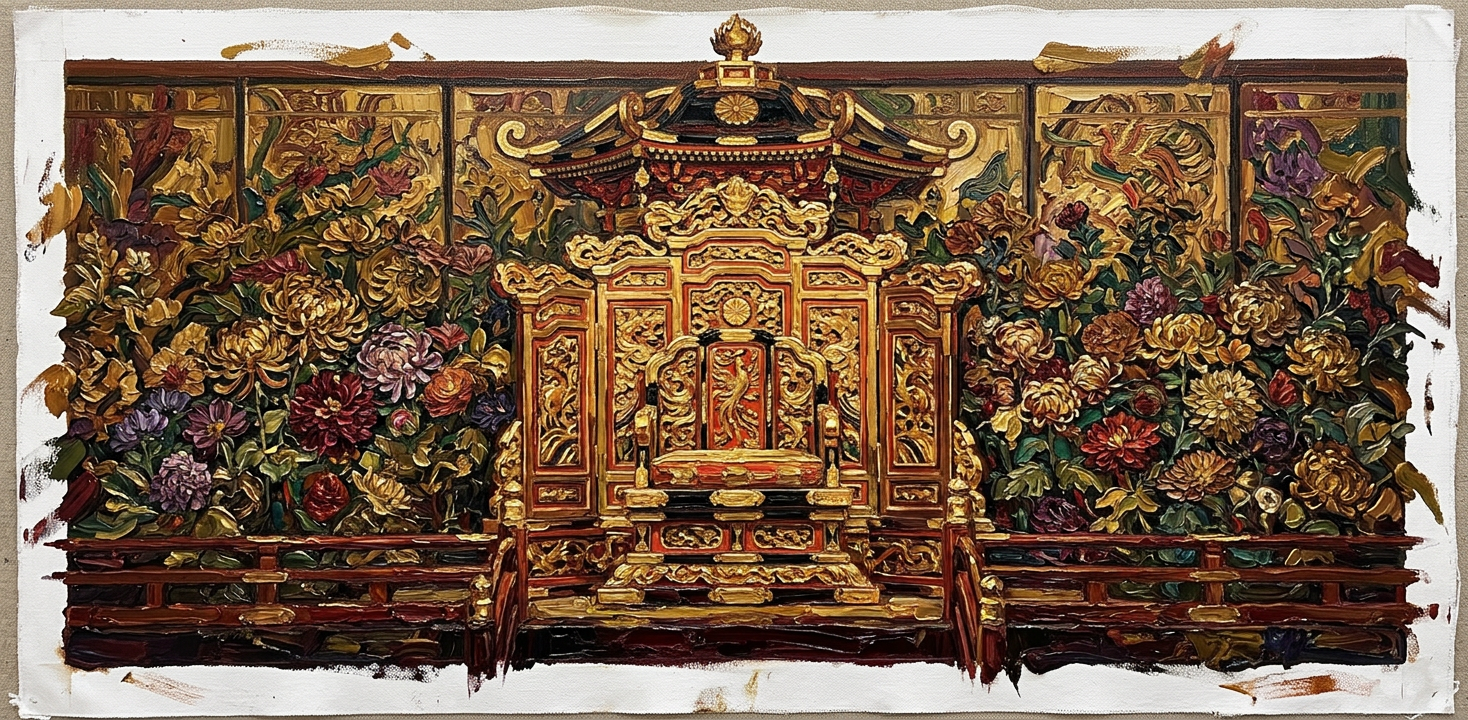
The context of 1947 is essential to understanding the law’s provisions, and what is often overlooked in contemporary discussions is how thoroughly that context shaped the document’s character. Japan had surrendered in August 1945. The American occupation under General Douglas MacArthur was engaged in a comprehensive restructuring of Japanese political and social institutions. The new constitution, promulgated in November 1946, redefined the Emperor as a symbol of the state rather than a divine sovereign — a transformation of profound significance that remains, in my assessment, one of the most consequential acts of constitutional revision in modern history. The Imperial Household Law, passed the following year, governed the practical mechanics of imperial succession within this new constitutional framework.
The law’s central provision was straightforward: succession to the Chrysanthemum Throne would pass exclusively through the male line. Women could not inherit; female imperial family members who married outside the imperial family would lose their imperial status entirely. In 1947, this provision attracted relatively little controversy. The imperial family at that time was considerably larger, and the question of male succession was not, in practical terms, pressing. The architects of the law were addressing the immediate political problem — how to preserve an institution that MacArthur had decided, for reasons of occupation stability, was worth preserving — rather than the long-term dynastic arithmetic.
That arithmetic is now the problem. The historical record is clear on this point: no male child has been born into the imperial family for forty years, with the notable exception of Prince Hisahito in 2006, whose birth temporarily quieted a debate that had been building since the 1990s. The succession question appeared, briefly, to have resolved itself. It had not. It had merely been deferred. As of 2026, the line of succession comprises three individuals — Crown Prince Akishino, Prince Hisahito, and the elderly Prince Hitachi — while thirteen women of the imperial family are excluded from consideration entirely by the provisions of a law that is now nearly eighty years old.
The parallels with earlier dynastic crises are, as historians tend to say, instructive. The European experience of the nineteenth and early twentieth centuries offers numerous examples of royal houses that failed to address succession arithmetic until the arithmetic made the decision for them. The Habsburgs managed their succession anxieties through an elaborate system of dynastic marriages that served, for several centuries, to paper over structural problems in the male line; when that system finally collapsed, it did so with considerable violence. The British Crown addressed its own succession question in 2013 with the Succession to the Crown Act, which abolished male preference primogeniture and permitted daughters to inherit ahead of younger brothers. The decision was uncontroversial. It was also, in retrospect, obviously necessary.
Japan has not yet managed this. The reasons are complex and deserve careful treatment. The conservative argument — that male-line succession is not merely tradition but the constitutive principle of the imperial institution itself, rooted in Shinto theology and the mythological descent from the sun goddess Amaterasu — is not without internal coherence. One need not agree with it to understand why it commands loyalty among those who hold it. The imperial institution’s claim to continuity rests, in part, on the argument that it has always been this way; to change the succession law is, in the view of its opponents, to change the nature of the thing being protected.
Contemporary accounts suggest that Emperor Naruhito is acutely aware of the difficulty. He has spoken carefully, within his constitutional constraints, about the shrinking size of the imperial family and the consequences for its capacity to carry out public duties. He has not, and cannot, advocate directly for legal reform. The distance between what the Emperor understands and what the parliament is prepared to do has been, for some years, the central unresolved tension of Japanese imperial politics.
In April 2026, the Japanese parliament announced a committee to examine the succession question formally. It is progress; whether it is sufficient progress, and whether it will produce actionable legislation before the dynastic arithmetic produces a crisis, remains to be seen. The historical record offers limited grounds for optimism in such cases. Parliaments that defer difficult institutional questions tend to defer them until deferral is no longer possible.
The law that was designed, in 1947, to stabilise an institution under extraordinary external pressure has become, nearly eight decades later, the most serious internal threat that institution faces. The historians knew this was coming. The archive is always waiting. It has considerably more patience than the rest of us.
Edmund Calloway is Crown & Court’s Royal Historian. A retired professor of European dynastic history with thirty years at Oxford, he writes about the kings and queens history forgot — and the ones it remembers rather too selectively.
“History doesn’t repeat itself — but dynasties certainly do.”