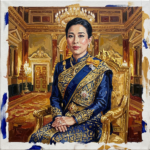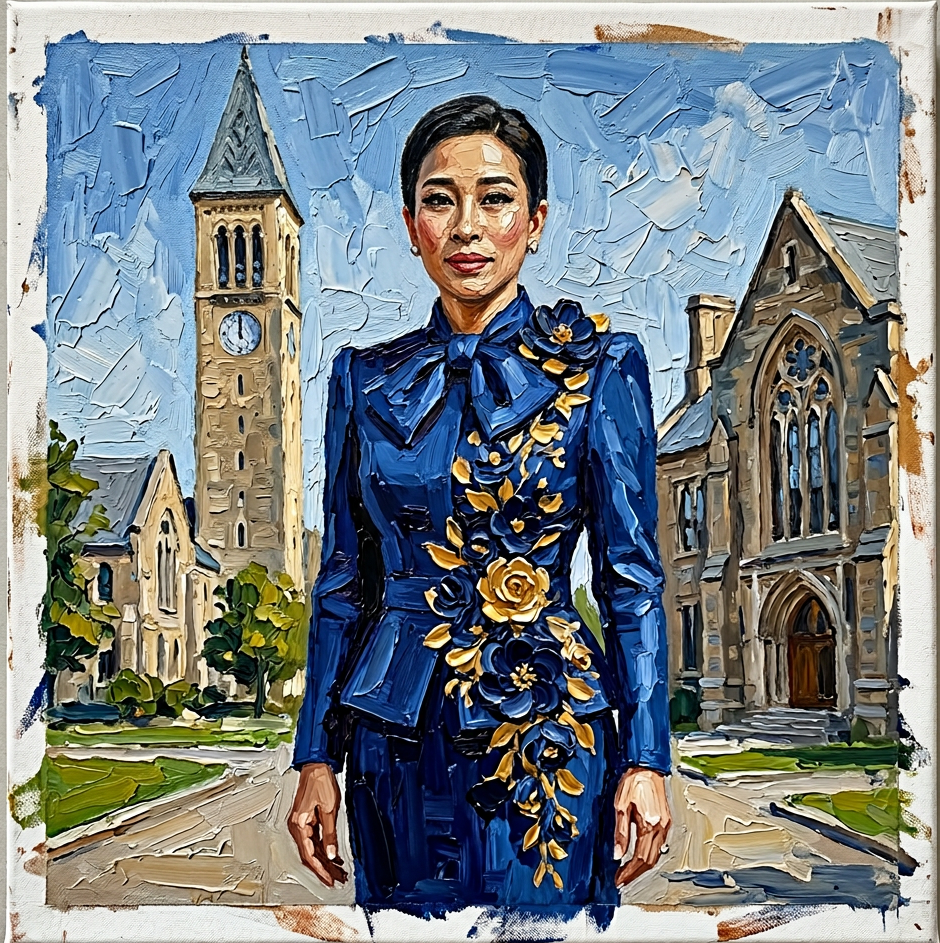
She reformed prison conditions for women worldwide, earned a doctorate at Cornell, served as a UN goodwill ambassador, and was quietly positioned as a future pillar of the Thai throne. Then, at 44, she collapsed at a dog training exercise and never woke up.
I have spent years writing about royal women who are defined by the institution they serve rather than the lives they actually lived. Princess Bajrakitiyabha of Thailand was something rarer. She was a royal woman who built a life so substantial, so genuinely accomplished, that the institution she served was enlarged by her presence in it.
She died on 11 June 2026. She was 47 years old. Thailand has been mourning ever since, and the mourning is real. Not the performed grief of a nation fulfilling an obligation, but the instinctive sorrow of people who understood, however imperfectly, that something irreplaceable had been lost.
The cultural context here is important. Thailand’s monarchy operates under constraints that most Western observers find difficult to fully appreciate. The lese-majeste laws, which carry prison sentences of up to fifteen years per charge, govern what can and cannot be said about the royal family in public. Criticism is not merely discouraged. It is criminalised. Within this environment, the affection for Princess Bajrakitiyabha was notable precisely because it did not feel compelled. It felt earned.
She was born in 1978, the eldest of King Vajiralongkorn’s seven children and the only child of his first marriage, to Princess Soamsawali. She studied law at Thammasat University, then crossed the world to Cornell University in New York, where she earned a master’s degree in 2002 and a doctorate in 2005. Her dissertation concerned the protection of the rights of the accused. This is worth pausing on. A princess of the Thai royal house chose to spend her academic years studying how legal systems treat the most vulnerable people within them. That is not a standard royal biography. That is a vocation.
She returned to Thailand and worked as a public prosecutor before entering the diplomatic service. She served as Thailand’s ambassador to Austria, Slovenia, and Slovakia. In 2017, she was appointed a goodwill ambassador for the United Nations Office on Drugs and Crime. Her focus was consistent throughout: the welfare of women in the criminal justice system, the conditions of female prisoners, the gap between the law as written and the law as experienced by the people most subject to it.
Her Kamlangjai campaign, known in English as Inspire, worked to rehabilitate imprisoned Thai women before their release. It was practical, sustained work, the kind that does not generate headlines but changes lives. More significantly, her advocacy contributed directly to the adoption by the United Nations General Assembly of what became known internationally as the Bangkok Rules, a set of standards governing the care and treatment of women in detention facilities worldwide. Her name is not attached to those rules in the way that a politician’s name attaches to legislation. But she is in them, in the thousands of hours of work that made them possible.
What my colleagues in London and New York have focused on, understandably, is the succession question. Thailand’s king has not named an heir. His son, Prince Dipangkorn Rasmijoti, is the presumptive heir because succession rules favour men. But analysts had noted for years that Princess Bajrakitiyabha’s combination of legal expertise, diplomatic experience, UN credentials, and genuine public affection positioned her as someone who could have held extraordinary influence over any future reign, perhaps as regent, perhaps in a formal advisory capacity that the Thai system has not yet defined. A constitutional change had even opened the theoretical possibility of female succession.
That conversation is now closed. What remains is the record.
Outside Chulalongkorn Hospital in Bangkok, mourners gathered holding photographs of her. Most had brought framed or laminated portraits from across the years of her public life. I have watched crowds gather outside royal hospitals before, in London and Copenhagen and Tokyo. There is a quality to genuine grief that is distinct from obligation. The crowds in Bangkok had it.
Among the first condolences came from Bhutan’s royal family. The message praised her lifelong devotion to public service. It was, given the source, a recognition from one small monarchy to another that some royal lives are genuinely lived in service to something larger than the throne.
I have translated many royal stories across many cultures. Some translate easily. Some resist every attempt. Princess Bajrakitiyabha’s story translates without difficulty, because at its core it is simply this: a woman who was given extraordinary privilege and used it, seriously and consistently, for people who had none.
That story does not need a throne to matter. It never did.
“Every crown tells a different story. I’m here to translate.”
Nadia Osei-Mensah is Crown & Court’s International Royal Correspondent. Born in Accra, raised in Copenhagen, and educated in Tokyo, she is fluent in five languages and equally fluent in the customs and complexities of royal families from every corner of the globe.
“Every crown tells a different story. I’m here to translate.”